National Maternity Voices invited anyone connected with a Maternity and Neonatal Voices Partnership to nominate a project undertaken in the last 2 years for one of our awards.
Below are the Stars and nominations for the ‘Listening’ award: for single changes made in response to feedback ‘You said ..We did’. Presentations from the winners and contact emails for the MNVPs can be found on our main awards page.
Listening Stars:
Hyperemesis Listening Session, Staffordshire and Stoke on Trent MNVP: brought service users & staff together to discuss a distressing condition
Pain Relief Management, Barking, Havering & Redbridge MNVP: addressing a key source of complaints and inequity
Other Nominations:
Unconscious bias, Bristol, North Somerset & South Gloucestershire MNVP
Partners able to stay overnight, Wigan MNVP
Service user voice in Recruitment, Chelsea and Westminster MNVP
Birth Centre Video, North Manchester MNVP
Signposting in hospital renovation, Bolton MNVP
Inclusive signposting, North Manchester MNVP
Neonatal unit signage, Staffordshire and Stoke on Trent MNVP
Late Booking, Tameside MNVP
Details of each project follow in order:
Listening Stars:
Project: Hyperemesis Listening Session
Staffordshire and Stoke on Trent MNVP
What? The listening event held by the Maternity and Neonatal Voices Partnership (MNVP) was especially important because it was a direct response to feedback from women that more needed to be done to improve care for those experiencing hyperemesis gravidarum (HG). Rather than allowing concerns to remain unaddressed, the MNVP created a dedicated space to explore these issues in depth and turn feedback into meaningful action.
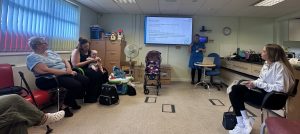 Service user involvement: By bringing together women with lived experience, community teams, and healthcare providers, the event created a rare opportunity for open and honest dialogue across all parts of the maternity system. Women were able to share first-hand accounts of their care: what worked well, where gaps existed, and how services could better support them during what is often a physically and emotionally overwhelming condition. At the same time, providers and community staff could listen directly, ask questions, and reflect on how care is delivered in practice
Staff involved: Family Hubs and Community Midwifery
Benefits: The event helped to build shared understanding and stronger relationships between women and professionals, which is essential for delivering compassionate and responsive care. The feedback collated was used by community teams to make recommendations on improving care for women and their families as well as informing staff training.
Project: Pain Relief Management
Barking, Havering and Redbridge MNVP
What? The MNVP heard that some women awaiting transfer to Labour Ward beds were not being offered analgesia despite reporting significant pain. Several complaints had been received about delayed pain relief across the maternity unit, highlighting a systemic gap in pain management for women, particularly during transfer delays. The Better Birth & Multi-Ethnic Empowerment Senior Lead Midwife established a Task & Finish Group focused on Improving Pain Management.
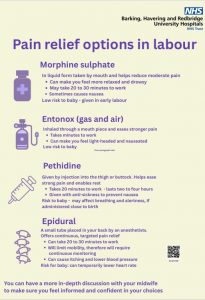
Changes Made: Co-Production of Pain Relief Management Leaflet. The MNVP leads were fully involved in the Task and Finish Group for Pain Relief, attending meeting and tracking progress. Changes to the drug cupboard at Triage to make it possible for women to receive pain relief immediately without delay. Also, the following changes were reinforced/ implemented: All women must be offered appropriate analgesia, regardless of bed status or transfer delays. First-line analgesia (paracetamol, dihydrocodeine, Entonox) must be offered in accordance with local guidelines. All suitable pain-relief options should be considered and discussed. Women must receive clear information about immediately available pain relief and what may become available upon transfer to Labour Ward (see poster).
Service user involvement: The issue was identified through multiple channels: Several formal complaints received about delayed pain relief in maternity, Service user feedback captured during a session at Barking Learning Centre revealed women waiting too long to receive pain relief across maternity especially women in labour.
Onyekwelu Somtochukwu the Maternity Voices Partnership Lead and Jennifer Harrison the Neonatal Voices Partnership Lead worked with the Senior Lead Midwife.
Staff involved: Senior Lead Midwife Better Birth & Multi-Ethnic Empowerment , Better Birth & Multi-Ethnic Empowerment Midwife, Antenatal Clinic and Inpatient Matron, Patient Experience Midwife, Labour Ward Deputy Matron, Consultant Doctor
Benefits: Improved pain management for all women across the maternity unit, regardless of bed availability, Enhanced patient experience and dignity during labour, Clearer communication about pain relief options, Ensured compliance with clinical guidelines and midwifery standards, Addressed recurring complaints about delayed pain relief.
This change particularly improved equity for marginalised groups, including: Women from multi-ethnic backgrounds, High-risk pregnancy patients who may experience longer waits, Women experiencing complications who require immediate pain management regardless of location, All women who previously may have been overlooked during busy periods or transfer delays.
Other Nominations:
Project: Unconscious bias can affect care
Bristol, North Somerset & South Gloucestershire MNVP
What? Disparities in maternity and neonatal services for under-represented groups are a significant issue, and unconscious bias can play a major role in affecting care and unintentionally shaping service users’ experiences. The MNVP used feedback and lived experiences from service users to co-produce an awareness poster that acts as a gentle but powerful visual reminder for staff to pause, reflect, listen, and act with empathy. The poster is planned for placement across maternity staff areas to encourage more inclusive, respectful, and person-centred care, focusing on growth rather than blame, with the aim of improving experiences and outcomes.
 Service user involvement: The issue was identified through feedback and lived experiences shared by service users via the MNVP. Service users, including women from diverse backgrounds and those with additional needs, contributed their voices and experiences, which informed the messages used in the poster. This work was supported through MNVP engagement activities and collaboration with community voices, with consent respected at all times.
Staff involved: From the LMNS (local maternity & neonatal system)
Benefits: Early feedback has been positive from maternity staff across both trusts, the LMNS, other MNVPs, and community organisations. The poster has been welcomed as a supportive, non-blaming tool that encourages reflection and learning. While it is too early to evidence measurable outcomes, the work contributes to improving equity by centring lived experience and raising awareness of how unconscious bias can impact care for under-represented and marginalised groups. Further feedback and evaluation are planned.
Project: Partners being able to stay overnight
Wigan MNVP
What? Wigan’s MNVP Lead has undertaken extensive listening work in response to feedback from families, directly supporting a shift in policy at the Trust, which has now moved to a 24-hour family-centered visiting model. Historically, partners were often required to leave shortly after birth, leading to distress for families transferred to postnatal wards late at night.
Nicola led a thematic review of service user feedback and benchmarked what was happening at other sites in Greater Manchester. This enabled her to present a case for change to Trust leadership. Partners or chosen supporters can now remain with the birthing person around the clock.
To ensure the success of this open-access model, the MNVP also helped develop a “code of conduct” resource for partners, balancing the need for 24-hour support with the clinical and privacy requirements of a busy maternity ward. In addition to these changes the ward is also now looking at purchasing more comfortable seating for partners staying overnight and installing a drinks station where partners can access tea, coffee and cold drinks.
Service user involvement: Service users were the primary catalysts for this change. The MNVP lead Nicola Ashurst collected their feedback over a number of months. Through Walk the Patch visits, online surveys, and community drop-in sessions, families expressed recurring concerns about the fact that birth partners were not able to stay overnight and how this led to “anxiety and loneliness” during induction and the postnatal period.
One service user shared that she felt unable to safely care for her newborn alone following a C-section without her partner’s help. Partners also voiced their frustration at being excluded from early bonding and feeding support. This evidence was collected and presented by Nicola in a thematic report.
Staff involved: The project was a high-level collaboration between Nicola and maternity staff (midwives, ward managers, senior leadership). Family hub workers, who support families in the perinatal period, also provided anecdotal evidence.
Nicola worked closely with the trust’s Patient & Public Engagement Lead Midwife, and the Chief Nurse. The MNVP acted as the critical friend to the Trust, presenting service user evidence at Safety Champions meetings and Maternity Governance boards.
Senior Midwives and Ward Managers were also closely involved to address staff concerns regarding ward management under a 24-hour model. To support frontline staff, including Midwives and Healthcare Assistants (HCAs), a senior midwife developed the new SOP and an “expectations” document for partners. This interaction was crucial; it empowered staff to manage the ward environment effectively while providing the compassionate care families were calling for. The Chief Nurse and Maternity Leadership ultimately used our MNVP thematic analysis alongside CQC survey data to ratify the policy change, ensuring it was embedded at every level of the Trust.
Benefits: The implementation of 24-hour visiting has delivered profound benefits for safety, equity, and emotional wellbeing:
- Enhanced Safety and Support: Partners are able to provide practical care and advocacy, which is particularly vital for those recovering from surgery. One partner noted: “I was able to support with a lot of overnight care, allowing my partner to get some rest.”
- Health Equity: The previous “time-of-day lottery” has been eliminated; all families now receive the same access to support regardless of when their baby is born.
- Improved Bonding: Continuous presence in the first 24–48 hours has strengthened early infant feeding and parental bonding, aligning with national best practices.
- Staff Empowerment: The new “etiquette” guidance has reduced friction on the wards, as staff feel confident that a professional environment will be maintained whilst welcoming partners.
Project: Embedding service user voice into Recruitment
Chelsea and Westminster MNVP
What? As an MNVP, over the last year, we have improved collaboration with our trust, cross-site, to ensure that we are embedded into the recruitment process for new staff roles on interview day.
Our role within a Stakeholder panel, means we are asking a question to every candidate who is interviewed. It allows us to ask candidates for their perspectives on centring service user voice within their role, and seeking out and amplifying those who are underrepresented or seldom heard, to improve service, collaboratively with the MNVP. A new aspect of the interview process requires the candidate to engage with a co-produced scripted scenario or complaint, and be able to demonstrate listening and compassion, alongside knowledge.
During 2025/26, we have been involved in the recruitment of many roles, including (but not limited to), Interim Divisional Director of Nursing and Midwifery, Deputy Director of Midwifery and Neonates (Maternity, Neonates and Gynaecology), Muslim Chaplain, Maternity Inpatients Matron and Local Neonatal Unit Matron.
Service user involvement: As MNVP leads, we are able to ensure current service user themes of feedback, complaints and workstreams are represented, within co-produced service user scenarios as well as in the question asked to candidates.
Staff involved: A range of leadership across Maternity and Neonatal Services, including the Director of Midwifery and Neonates and Cross Site Lead Neonatal Nurse.
Benefits: Co-production within recruitment in Maternity and Neonatal services is a vital improvement to practice and demonstrates sharing power, responsibility and decision making. It demonstrates a trust culture that values service user voice when improving care experiences. Our involvement keeps our services genuinely patient centred, allowing service user feedback themes to feed into recruitment. It values a candidate’s ability to work directly with, engage and care for service users, being an important and integral component of their interview.
It improves quality and safety because a variety of diverse perspectives are represented on the panel. As an MNVP, we are able to focus on the soft, but critical, skills candidates bring to the role, such as empathy, communication and respect for women, birthing people and families. It also is improving the trust we have with communities, because of authentic places and spaces our MNVP sits within, improving quality and governance too.
Project: Birth Centre Video
North Manchester MNVP
What? In North Manchester the MNVP lead, Ashleigh Reed, led on the creation of a video resource about the local birth centre, responding to feedback from service users who wanted to learn more about birthplace options. We co-ordinated with a professional videographer to storyboard the video, shoot footage and create an informative, impactful piece of content.
Service user involvement: Service users were central to shaping the script and visuals for the video, sharing what they most wanted to see and know. Several also appeared in the video itself, sharing their personal experiences of giving birth at the Bluebell Birth Centre to help inform and inspire other parents.
Staff involved: Our MNVP lead Ashleigh worked with the Birth Centre manager, labour ward manager, community matron and a student midwife.
Benefits: Since the launch of the video – alongside an increase of in-person tours – the number of births at the Bluebell Birth Centre has been gradually rising. The video has had nearly 3k views on Youtube and is now routinely shared during antenatal clinics, parent education sessions, and on social platforms helping more families feel informed when considering their place of birth.
Project: Improving signposting during hospital renovation
Bolton MNVP
What? The maternity hospital is mid-way through a two-year refurbishment. We have received feedback from many concerned services who had missed or were delayed for appointments due to the changing environment (including signs which were outdated and often lead to dead ends. This added a secondary layer of stress and anxiety for visiting families, as well as being draining for the staff. We worked closely with service and users and staff to understand the problems, map the service user journey through the hospital and create a better system of signage.
The MNVP is helping the trust to improve the contents of appointment letters and how these can be updated for clarity. A filming project with the MNVP and the trust’s comms to help improve navigation is due to take place later this year.
Service user involvement: The MNVP lead Amy Rothwell and engagement officer Wardah Shahid visited the site on multiple occasions, interviewing service users and observing their journey (including real-time tracking of visitor frustration and navigation “workarounds.”) Our first visit was in October 2025. We asked 12 families to fill in a short survey, which indicated that many were confused. This was followed up in November with a “15 Steps” Wayfinding audit: a collaborative walk-through with service users and senior clinical staff to identify sightline issues. (See Facebook post ) One user described the heartbreak of being lost while searching for the Early Pregnancy Unit (EPU) following a loss. Another shared the distress of being “on time” to the hospital but “late by one hour” for their appointment due to the confusing layout, resulting in tears.
Staff involved: The MNVP acted as the vital conduit between the “front door” experience and Trust leadership. We ensured high-level accountability by involving the Director of Midwifery, two Matrons, and the Chief Nurse, alongside frontline staff.
Interaction included:
- Collaborative Audits: We invited the Director of Midwifery and two Matrons to join our “15 Steps” walkaround. This allowed them to see firsthand confusion of current hoardings that they had previously overlooked.
- Frontline Engagement: We engaged a Triage Midwife, who identified a critical safety gap: the triage entrance was inaccessible after 8:00 PM, a fact not reflected on any signage.
- Senior Leadership Action: Following our report, the Chief Nurse adopted the issue as a personal priority during the March 2026 Safety Champions meeting.
This led to a follow-up walk-around with the senior leadership team in Spring 2026 to verify environmental improvements and initiated an overhaul of the templated appointment sent to families.
Benefits: This is an ongoing project but some improvements have already been made. Better signage has been added (including the immediate removal of conflicting signs and incorrectly labelled doorways) and service users have reported an overall calmer and more orderly feel to the environment.
By improving signage, we reduced the burden on clinical staff and construction workers who were previously acting as ‘human signposts’. Identifying the 8:00 PM entrance closure prompted the Trust to clarify emergency access, reducing potential delays in urgent care.
Project: Inclusive signposting at hospital trust
North Manchester MNVP
What? We organised and led a 15 steps visit to North Manchester General Hospital, which serves a very diverse population. Many of the participants commented positively on an information board within the maternity wards that promoted and recognised Equality and Diversity – but said they would like to see this in a more prominent location. We identified that vital E&D messaging was often hidden in poorly lit corridors or used inconsistent terminology across different Trust sites.
Since receiving this feedback, the hospital’s senior leadership team agreed that E&D boards should be displayed in visible, high-traffic area and to review the use of inclusive language in all three of the Trust’s sites.
Service user involvement: During the “15 Steps” walk-around in March 2026, parents and birthing people spoke positively about information and posters in the ward. One specific concern was an E&D board located in a dark corridor. VCSE organisations taking part included: Proud 2b Parents, Ethnic Health Forum, SPOONS, Jewish Doulas, and Children’s Centre representatives. During a discussion, it was explained that inconsistent language—such as alternating between gendered and inclusive terms—could create a sense of unease. Families expressed that for marginalized groups, particularly the LGBTQ+ community, these “small” environmental cues are vital for reducing the high levels of anxiety often experienced in clinical settings.
We received this powerful piece of feedback from one trans dad (birthing parent)“Even seeing this kind of language just once on a display can make a big difference. It helps me feel included and more willing to engage with the information being shared…The contrast between how uncomfortable I’ve felt in other hospitals and how seamlessly it was done here was actually quite emotional for me. Thank you for being so effortlessly inclusive!”
Staff involved: The MNVP Lead for North Manchester collaborated directly with the Head of Midwifery and the Maternity Leadership Team to present the real-time feedback from the walk-around. The feedback was shared with the Head of Midwifery and the maternity leadership team, who escalated it to the Chief Executive. It was also presented at the Improving Equity and Reducing Health Inequalities meeting, where it was agreed that E&D boards should be displayed in visible, high-traffic areas.
Benefits: This project has delivered both immediate physical changes and long-term cultural shifts:
- Enhanced Engagement: By moving E&D boards to visible, high-traffic waiting areas, the Trust has increased the likelihood of families engaging with important health and rights information.
- Improved Health Equity: Standardizing accessible language ensures that health messages reach diverse communities more effectively, contributing to a reduction in health inequalities for LGBTQ+ and ethnic minority families.
- Visible Commitment: The rapid relocation of resources demonstrated to service users that their feedback is valued and acted upon at the highest levels of NHS leadership.
Project: Neonatal unit signage
Staffordshire and Stoke on Trent MNVP
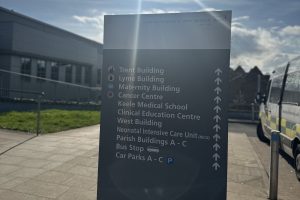
What? In June the MNVP held a 15 steps event specifically tailored to the neonatal unit at UHNM. During this event service users identified that there was no signage from the car parks to the neonatal unit and families were unsure where to go. This feedback was shared with the Trust and has helped inform improvements to signage to make the route clearer and easier to follow for families.
Service user involvement: A mixture of service users, community group leaders, MNVP leads and health professionals came together to undertake the 15 steps visit from the eyes of the parents visiting the unit.
Staff involved: The University Hospital North Midlands Neonatal Team
Benefits: The 15 Steps process identified that signage from the car park to the neonatal unit was limited and could be confusing for parents, particularly at a stressful time. Clear, visible signage is now in place from all car parks, helping parents and loved ones find the Neonatal Unit quickly and easily.
Project: Late Booking Project
Tameside MNVP
What? Staff at the trust had identified that a large portion of women (42%) were booking late for antenatal care – and potentially missing out on early screening and intervention for complications. The trend was particularly pronounced among women from ethnic minority backgrounds and those living in areas of high deprivation.
Staff drew connections between late booking and broader safety concerns, particularly around reduced fetal movements. Delayed engagement with services can limit a woman’s awareness of key symptoms and reduce the likelihood of timely reporting.
We worked with the trust in engagement to help them understand the reasons for late booking, including cultural barriers, and understand the communication needs of local service users. A particular focus was to get outside the walls of the hospital and into the wider community to speak with people.
Service user involvement: The MNVP lead Jaweria Maqsood helped conduct direct consultation with women at family hubs and health visitor clinics in Ashton and Hyde, with a focus on whether language barriers, different cultural norms and digital exclusion were factors on late booking. QR codes and promotional materials were shared during these visits to raise awareness of the new maternity microsite. We also supported surveys and held meetings to identify why digital-first booking systems were failing specific demographics.
Users highlighted that requiring an NHS number and an email address created a significant barrier for those with low IT literacy or English as a second language. One woman shared that she could not use the phone booking system due to language barriers and only secured an appointment at three months pregnant after a chance meeting with a midwife at a family hub. We noted that many participants from South Asian communities preferred information via trusted networks and WhatsApp rather than searching online.
Staff involved: The Saving Babies Lives lead identified the issue required a quality improvement project. The ongoing findings from the engagement work were regularly shared with matrons and the Saving Babies Lives lead, and formally presented to leadership to inform wider service planning. Local surgeries, in particular Ashton GP surgery, promoted and shared material; health visitor clinics also supported this project.
Benefits: Following advice from the MNVP on how to better access ethnic minority communities, the Saving Babies Lead (SBL) has established a link with Ashton College. The college is supporting the development of a promotional video, which will be shared through accessible platforms such as WhatsApp to maximise reach and engagement.
The promotion of the new microsite and the promotion of materials through social media and in the community has led to an increased booking uptake, with a measurable improvement in the number of women accessing antenatal care in a timely way. A deeper understanding of barriers was gained by listening directly to community voices and work is ongoing.